Craters
Cratering refers to the formation of small depressions or pits on the surface of Royal Icing during the drying process. It occurs when air bubbles get trapped inside the medium during the application on the cookie. As RI dries and hardens, these air bubbles expand and create small craters on the surface. This is particularly frustrating because your project looks fine as you work on it, but as it dries, these craters start to form, and it becomes difficult to fill them in later.
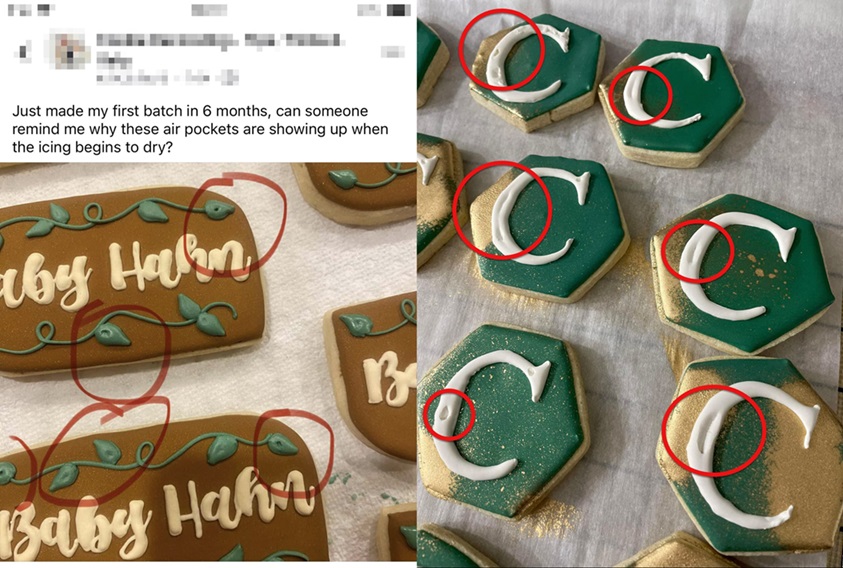
How to avoid craters in your icing?
- Try a thicker consistency icing. "Thicker" means the thickest possible consistency within the chosen range. Your icing must be thin enough to look smooth after drying, but also has to provide enough volume and stability to hold the desired shape (see Consistencies).
-
Start flooding from the center of the section to the outside.
-
After outlining the desired shape and before flooding, add a drop of icing to the center of the section you are flooding and wait a while. The drop of the icing in the center will create a “support” for the flooded section, preventing it from sinking.
-
Run a scribe tool through the flooded area. This should break any air pockets trapped in the icing.
-
Use a dehydrator. The controlled drying process, paired with a lower humidity level, should lower the risk of craters forming as the icing sets.